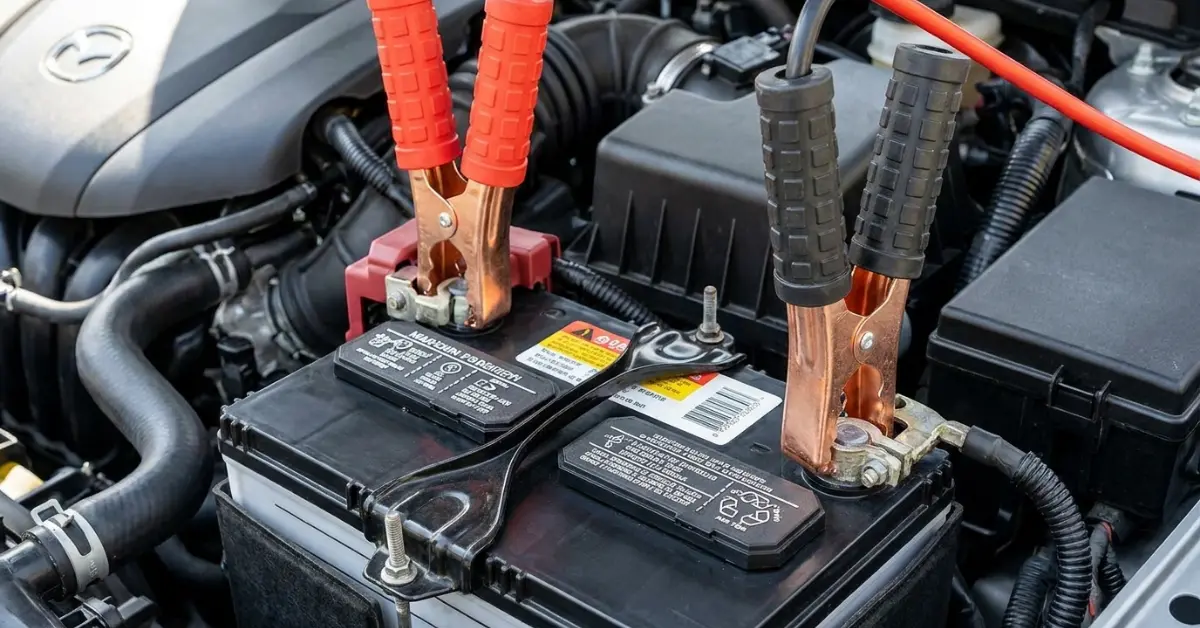
How a Car Battery Is Charged While Driving: Step-by-Step Guide for UAE Drivers
Understanding how a car battery is charged while driving is not just general knowledge. The car battery charges while driving through the alternator, which converts mechanical energy from the engine into electrical energy at 13.8V to 14.4V DC, replenishing the charge lost during startup. In the UAE, where summer temperatures exceed 45°C and stop-start traffic is a daily reality, this charging cycle is under constant stress.
This guide explains the full charging process step by step. It also shows how extreme heat and driving conditions affect battery performance, and when your battery needs professional inspection instead of relying on another drive.
What Actually Charges Your Car Battery While the Engine Is Running?
The alternator charges the car battery while the engine is running, not the engine itself. It is a generator that is bolted to the engine and connected through a serpentine belt (also called a drive belt).
When the engine runs, the belt spins and rotates the alternator’s internal rotor. This rotation produces alternating current (AC) through a process called electromagnetic induction, which is defined in Faraday’s Law of Electromagnetic Induction (Faraday, 1831).
- AC generation: The spinning rotor creates alternating current (AC) inside the alternator
- Conversion to DC: The rectifier diodes convert this AC into direct current (DC), which the battery can store and use
Without a working alternator, even a brand-new battery will drain completely within 20 to 30 minutes of driving.
Step-by-Step: How a Car Battery Is Charged While Driving
Step 1: The Engine Starts and Draws Battery Power
To start the engine, the battery releases a burst of 150 to 600 amperes (A) of cranking current, depending on engine displacement. This cold cranking ampere (CCA) draw partially depletes the battery in 2 to 3 seconds.
According to a study published in the Journal of Power Sources , repeated deep cycling below 50% state of charge (SOC) causes irreversible sulfation on lead plates, reducing battery capacity by up to 30% within 18 months under hot climates.
The battery is partially drained every time you start your car. The charging cycle that follows is essential to restore what was used.
A weak battery shows its first failure signs at startup, including:
- Sluggish cranking (starter motor turning slowly)
- Delayed ignition response
- Single or repeated clicking sounds (insufficient CCA)
Step 2: The Alternator Immediately Takes Over
The alternator takes over within 2 to 3 seconds of engine startup. The serpentine belt spins the rotor inside the stator windings at 1,500 to 3,000 RPM at idle, generating AC voltage. The rectifier, a set of 6 diodes arranged in a 3-phase bridge configuration, converts this to a stable DC output.
This rectification process is consistent with the Graetz bridge circuit design used in automotive alternators since the 1960s. The alternator begins charging the battery within seconds of the engine starting in a healthy system.
Step 3: The Voltage Regulator Controls the Flow
The voltage regulator maintains the alternator output within 13.8V to 14.4V for standard flooded lead-acid (FLA) batteries and up to 14.7V for absorbent glass mat (AGM) batteries. It samples output voltage hundreds of times per second through pulse-width modulation (PWM) and adjusts the rotor’s field current accordingly.
Overcharging above 15V causes gassing, grid corrosion, and thermal runaway in FLA batteries (Battery Council International Technical Bulletin, 2019).
A failing voltage regulator produces 4 measurable symptoms:
- Dashboard battery warning light stays on while driving.
- Headlights flicker or change brightness at varying engine speeds.
- The battery reads full but goes flat after parking overnight.
- Electrical accessories behave erratically, including radio resets and slow power windows.
Step 4: Current Splits Between the Battery and Active Electrical Systems
The DC output from the alternator splits between 2 simultaneous loads: recharging the battery and powering all active electrical systems, including the HVAC compressor, ECU, infotainment, LED headlights, ADAS sensors, and power steering motor. Most passenger car alternators are rated between 80A and 150A. Performance SUVs and EVs with large displays or Level 2 ADAS systems use alternators rated at 200A or more.
Running the air conditioning at maximum in summer adds a compressor load of 5 to 8 amps to the alternator, based on typical R-134a compressor draw data (SAE International, 2011, Paper 2011-01-0940). Combined with headlights (8 to 12A), infotainment (5 to 10A), and rear demister (15 to 25A), the total accessory draw can reach 50 to 60A, leaving limited surplus for battery charging in stop-start traffic.
Step 5: The Battery Stores Energy in Chemical Form
The electrical energy from the alternator converts into chemical potential energy through an electrochemical reaction inside the lead-acid battery. During charging:
- Positive plates (lead dioxide, PbO₂) become further oxidized.
- Negative plates (sponge lead, Pb) reduce as sulfate ions (SO₄²⁻) return to the electrolyte.
- Electrolyte (sulfuric acid, H₂SO₄) regains specific gravity, rising from 1.10 to 1.28 g/cm³ at full charge.
This electrochemical process is governed by the Peukert equation for lead-acid batteries, which describes the non-linear relationship between discharge rate and available capacity. Heat accelerates plate corrosion and electrolyte stratification. UAE ambient temperatures above 45°C reduce battery cycle life by 50% compared to European testing conditions at 25°C, according to Arrhenius degradation modeling.
Step 6: The Charging Continues Until the Battery Is Full (or You Stop)
The charging continues at a controlled rate until the battery reaches 100% state of charge (SOC), after which the voltage regulator drops to a float voltage of 13.2V to 13.4V to prevent overcharging. A fully charged 12V battery reads 12.6V to 12.8V with the engine off, and 13.8V to 14.4V with the engine running.
Charging stops the moment the ignition is switched off. Self-discharge then begins at a rate of 3 to 5% per month at 25°C, accelerating to 15 to 25% per month at temperatures above 40°C.
Why This Process Is More Demanding in The UAE?
Extreme Heat Degrades the Drive Belt Faster
Under-bonnet temperatures in summer regularly exceed 80 to 95°C, causing EPDM rubber serpentine belts to harden, crack, and slip. A slipping belt reduces alternator rotor speed by up to 40%, cutting charging output proportionally.
The Gates Corporation belt wear study (2018) found that belt life reduces by 50% for every 10°C increase in sustained operating temperature above the rated spec. Inspect the drive belt every 20,000 km and replace it every 2 years in UAE conditions.
Sand and Dust Clog Alternator Vents
The alternator relies on internal airflow through ventilation slots to dissipate the heat generated at 10 to 15% energy loss during AC-to-DC conversion. Fine desert dust (PM2.5 to PM10 particles) clogs these vents, raising internal winding temperature above the 180°C insulation rating of Class H windings. Clean alternator vents every 10,000 km or after any significant sandstorm exposure.
Stop-Start Traffic Prevents Full Battery Recovery
At idle (600 to 800 RPM), the alternator rotor spins at approximately 1,500 RPM due to the belt pulley ratio, producing only 30 to 50A of output current. With AC running, this barely offsets accessory load, leaving near-zero surplus for battery charging.
Trips under 15 to 20 minutes in city traffic are among the 3 most common causes of premature battery failure. Take at least 1 highway drive per week of 30+ minutes at sustained engine RPM to allow full battery recovery.
High Ambient Temperatures Accelerate Self-Discharge
A parked car in the direct Dubai summer sun reaches interior temperatures of 70 to 80°C. This accelerates battery self-discharge from the standard 3 to 5% per month to 20 to 30% per month.
A battery parked uncovered for 5 to 7 days in summer can drop below 11.8V, entering the deep discharge zone where irreversible sulfation begins. Park in shaded or covered parking whenever possible.
How to Know If Your Charging System Is Working Correctly?
Dashboard Check (Takes 30 Seconds)
- Battery warning light: Illuminates briefly at startup, then switches off within 3 seconds. A light that stays on while driving indicates a charging system fault.
- Voltage display: Look for 13.5V to 14.8V while driving. A reading below 13V with the engine running suggests alternator undercharging.
Multimeter Test (Takes 5 Minutes)
Use a digital multimeter (available at any UAE car accessories store for under AED 30):
- Engine off: Healthy battery reads 12.6V to 12.8V
- Engine running at 1,500 to 2,000 RPM: Healthy charging system reads 13.8V to 14.4V
Load test: With headlights, AC, and rear demister on simultaneously, voltage should stay above 13.5V. A drop below 13V under load indicates alternator strain.
When Driving Is No Longer Enough to Charge Your Battery?
Driving only restores charge to a fundamentally healthy battery. A degraded battery creates excess load on the alternator, shortening its lifespan. Alternator replacement in the UAE costs AED 800 to AED 2,500, compared to AED 250 to AED 650 for a replacement battery.
Stop relying on driving to charge your battery if any of these 5 conditions apply:
- The battery is older than 3 years in UAE conditions (European 5-year ratings are tested at 25°C, not 45°C).
- The battery has been deeply discharged (below 10.5V) more than 2 to 3 times, causing irreversible sulfation.
- The car struggles to start even after a 30-minute highway drive, indicating the battery cannot retain a charge.
- Battery load test shows below 70% capacity, measurable with a conductance tester (Midtronics MDX-P300 or equivalent).
- Persistent battery warning lights return after parking overnight, despite clearing during driving
Replace the battery. Do not compensate with longer drives.
Common Mistakes Drivers Make While Charging
- Only driving short distances. Trips under 15 minutes mean the battery never fully recovers between starts. Over 3 to 4 months, this creates progressively deeper partial cycling and sulfation.
- Leaving the car parked during Eid or National Day holidays. Even 4 to 5 days of inactivity in summer heat can drop a marginal battery below the safe 11.8V threshold.
- Ignoring the battery warning light. A persistent battery warning light indicates a fault. It does not self-resolve.
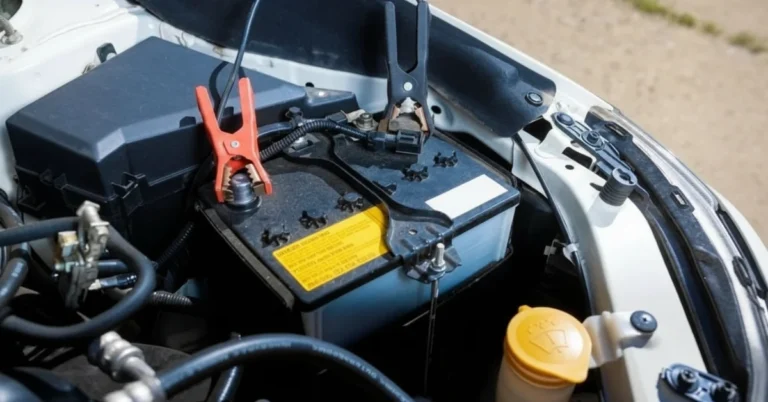
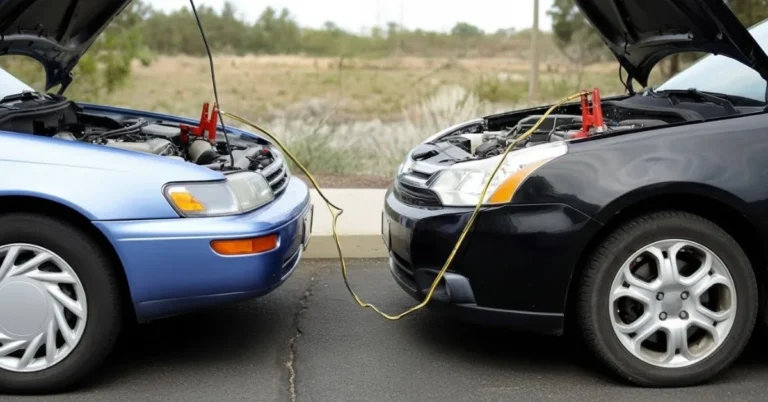
- Jump-starting and assuming the problem is solved. A jump-start restores operation temporarily. It does not fix the root cause. Always follow a jump-start with a full charging system inspection.
- Running high-load accessories with the engine off. The rear demister draws 15 to 25A and the AC blower draws 10 to 15A. Running both with the ignition on and the engine off drains a standard 60Ah battery to dangerously low levels within 45 to 60 minutes.
Best Driving Habits to Keep Your Battery Charged and Healthy in the UAE
- Drive for at least 20 to 30 minutes at a stretch, at least twice a week, on highways where steady engine RPM allows the alternator to operate at full efficiency.
- Turn off the rear demister and reduce AC fan speed when idling for more than 5 minutes.
- Use covered or shaded parking to keep battery temperature below 40°C between drives.
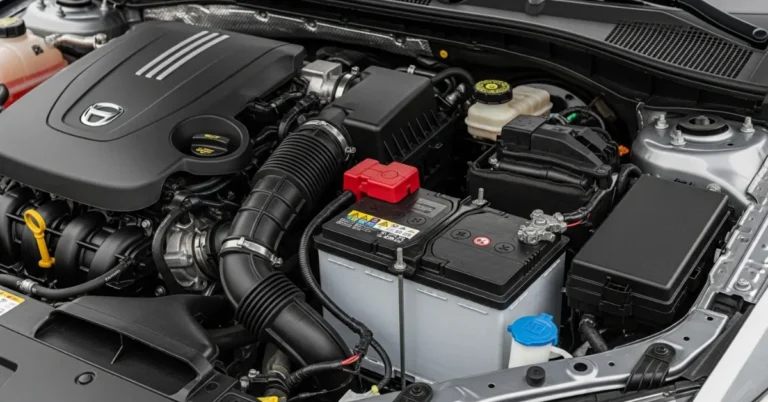
- Inspect battery terminals every 6 months for white or greenish sulfate deposits, which increase resistance and reduce charging efficiency by up to 20%
- Schedule a battery health check every March or April, before peak summer electrical demand.
- Use a smart battery maintainer (CTEK MXS 5.0 or equivalent) if the vehicle will sit unused for more than 5 days.
How Long Does It Take to Fully Charge a Car Battery While Driving?
To fully charge a car battery while driving, it takes 15 to 20 minutes of highway driving after a light discharge (normal startup) and 90 to 120 minutes after a deep discharge, with no guarantee of full recovery in severely degraded batteries.
Battery Discharge Level | Highway Driving (100+ km/h) | City Driving (stop-start) |
Light discharge (after normal start) | 15 to 20 minutes | 30 to 40 minutes |
Moderate discharge (after several short trips) | 30 to 45 minutes | 60 to 90 minutes |
Deep discharge (battery was near flat) | 90 to 120 minutes | May not fully recover |
These are estimates for a healthy battery with 80%+ capacity. An aging battery may accept charging current but cannot retain it, appearing recovered only to fail again within hours of parking.
Warning Signs That Your Charging System Needs Attention Now
Inspect the charging system immediately if any of these 7 symptoms appear:
- The battery warning light stays on while driving.
- Headlights noticeably dimmer than usual, particularly at idle
- The engine cranks slowly or with less force than normal.
- Electrical accessories cut out or reset unexpectedly, including the radio or power windows.
- Burning rubber smell from the engine bay, indicating a slipping serpentine belt
- Vehicle dies while driving (alternator failure, not battery failure)
- Jump-start required more than once within any 30-day period.
One symptom is enough to warrant a same-day inspection.
Battery Zone UAE: Keeping You Charged Across Dubai and Beyond
At Battery Zone UAE, we understand the 3 unique stress factors that UAE roads, climate, and driving patterns place on your charging system: extreme heat above 45°C, fine desert dust, and chronic short-trip cycling. Whether you commute daily on the E11 between Dubai and Abu Dhabi, do school runs in Jumeirah, or drive to Hatta on weekends, your battery and alternator need to be in measurable, verified condition.
Our professional battery health checks include a full alternator output test, voltage regulator assessment, drive belt inspection, and battery load test using conductance testing technology (Midtronics standard), giving you a complete SOC and state of health (SOH) report, not just a pass or fail reading.
Contact Battery Zone UAE today to book your battery and charging system inspection. Mobile service is available across Dubai, Sharjah, and Abu Dhabi.
Frequently Asked Questions
Does a car battery charge while the engine is idling?
Yes, but at a reduced rate. At idle RPM, the alternator produces only 30 to 50A, which may barely offset the draw of AC, headlights, and other accessories running simultaneously. Extended idling in the UAE summer heat is far less effective than driving at steady highway speeds above 80 km/h.
If your battery is over 2 years old, living through Dubai or Abu Dhabi’s heat, and you want absolute certainty beyond a voltage number, a professional conductance test is your next step.
Contact Battery Zone UAE today for a free battery health check at your location. Whether you are in a residential compound in Arabian Ranches, an office building in DIFC, or on the side of Emirates Road, our team arrives with professional-grade diagnostic equipment, a full range of battery brands, and the expertise to get you back on the road fast.
How long should I drive to charge a dead battery?
To charge a deeply discharged battery, drive for at least 90 minutes on the highway. If the battery has been deeply discharged more than 2 to 3 times, highway driving alone may not be sufficient. An external smart charger or professional load test is the recommended next step.
Can I damage my battery by driving too long?
No. Once the battery reaches full SOC, the voltage regulator drops to float voltage (13.2V to 13.4V) and prevents overcharging. Extended driving does not harm a healthy battery.
Why does my battery die even though I drive every day?
If daily drives are under 15 to 20 minutes consistently, the battery never fully recovers the charge lost during startup. Repeated partial cycling accelerates sulfation. This is among the 3 most common causes of premature battery failure in UAE urban drivers.
What is the correct battery voltage while driving?
13.8V to 14.4V is the correct battery voltage while driving with a healthy charging system. Consistent readings below 13.5V with the engine running indicate a charging fault requiring immediate inspection.